姓名:崔玉竹
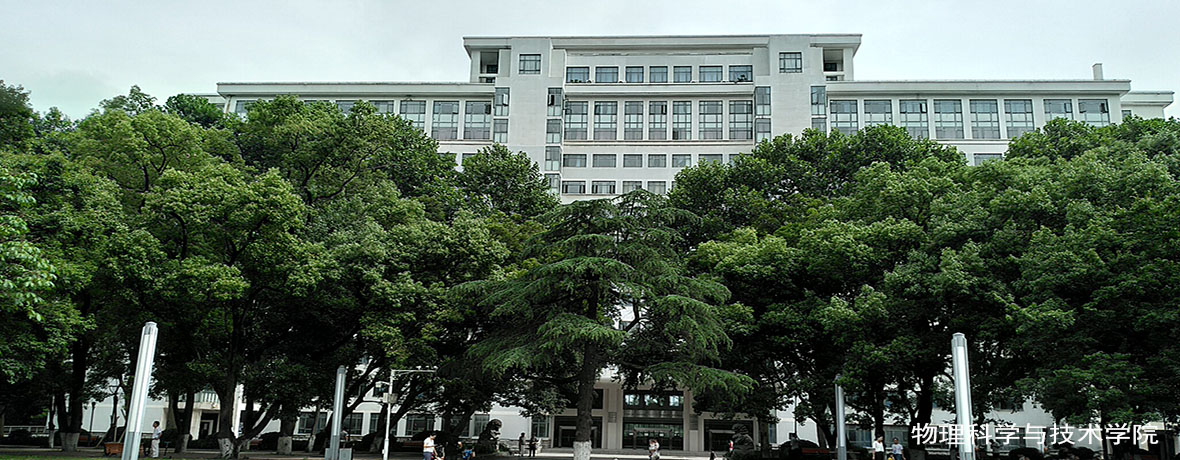
办公室:华中师范大学9号楼(物理科学与技术学院)1126室
邮箱:yuzhu.cui@ccnu.edu.cn
教育背景
2017.10–2021.12 日本国立天文台 / 综合研究大学院大学,天体物理学,博士
2013.09–2016.07 中国科学院上海天文台 / 上海应用技术大学,天体物理学,硕士
2009.09–2013.07 河北工业大学,应用物理学,学士
工作经历
2025.04–至今 华中师范大学物理科学与技术学院,特任研究员
2023.03–2025.03 之江实验室,博士后
2021.12–2023.02 上海交通大学李政道研究所,博士后
研究方向
超大质量黑洞
黑洞吸积盘
活动星系核相对论喷流
甚长基线干涉(VLBI)高分辨率成像与时域监测
研究简介
崔玉竹,华中师范大学物理科学与技术学院特任研究员,主要从事超大质量黑洞、黑洞吸积盘和活动星系核相对论喷流的观测研究,擅长利用甚长基线干涉(VLBI)技术开展高分辨率射电成像与结构演化分析。
于2017年加入事件视界望远镜合作组织(Event Horizon Telescope Collaboration, EHTC),参与了M87中心黑洞和银河系中心黑洞成像相关研究。作为EHTC成员,参与了人类历史上首张黑洞照片的合作研究,并获基础物理学突破奖(2020)、爱因斯坦奖章等奖项。
在个人主导成果方面,主持开展了东亚甚长基线干涉阵(EAVN)的性能评估与M87喷流长期监测研究。通过对约170个历元VLBI观测数据的系统分析,揭示了M87喷流存在约11年的周期性进动,为中心超大质量黑洞自旋及黑洞—吸积盘—喷流系统耦合提供了重要观测证据。相关成果以第一作者兼通讯作者身份发表于《Nature》;后续关于M87弯曲喷流与致密吸积盘协同进动的研究成果发表于《Nature Astronomy》,进一步推进了对黑洞喷流形成与演化机制的认识。
目前担任事件视界望远镜多波段工作组联合负责人,主持国家自然科学基金青年项目、中国博士后科学基金特别资助和面上资助等项目。未来将继续依托EHT、EAVN等国际合作平台,围绕黑洞—吸积盘—喷流系统的协同演化开展多尺度观测与理论研究,并推动我国VLBI观测能力建设。
English Version
Name
Yuzhu Cui
Office
Room 1126, Building No. 9, School of Physics and Technology, Central China Normal University
Email
yuzhu.cui@ccnu.edu.cn
Education
2017.10–2021.12 Ph.D. in Astrophysics, National Astronomical Observatory of Japan / SOKENDAI
2013.09–2016.07 M.S. in Astrophysics, Shanghai Astronomical Observatory / Shanghai Institute of Technology
2009.09–2013.07 B.S. in Applied Physics, Hebei University of Technology
Professional Experience
2025.04–Present Research Professor, School of Physics and Technology, Central China Normal University
2023.03–2025.03 Postdoctoral Researcher, Zhejiang Lab
2021.12–2023.02 Postdoctoral Researcher, Tsung-Dao Lee Institute, Shanghai Jiao Tong University
Research Interests
Supermassive black holes
Black hole accretion disks
Relativistic jets in active galactic nuclei
High-resolution imaging and time-domain studies with Very Long Baseline Interferometry (VLBI)
Brief Introduction
Yuzhu Cui is a Researcher at Central China Normal University. Her research focuses on supermassive black holes, black hole accretion disks, and relativistic jets in active galactic nuclei. She specializes in high-resolution radio imaging and structural evolution studies using Very Long Baseline Interferometry (VLBI).
She entered the field of radio astronomy in 2013 and received her Ph.D. in astrophysics from the National Astronomical Observatory of Japan in December 2021. She then worked as a postdoctoral researcher at the Tsung-Dao Lee Institute of Shanghai Jiao Tong University and Zhejiang Lab before joining Central China Normal University in April 2025.
Dr. Cui joined the Event Horizon Telescope Collaboration (EHTC) in 2017 and contributed to studies related to the black hole images of M87* and Sgr A*. As a member of the EHTC, she participated in the collaborative effort that produced the first-ever image of a black hole, and received major international honors including the 2020 Breakthrough Prize in Fundamental Physics and the Einstein Medal.
In her independent research, she led the performance evaluation of the East Asian VLBI Network (EAVN) and a long-term monitoring program of the M87 jet. Based on a systematic analysis of about 170 VLBI epochs, she discovered an approximately 11-year periodic precession in the M87 jet, providing important observational evidence for the spin of the central supermassive black hole and for the coupling among the black hole, accretion disk, and jet system. This work was published in Nature as first and corresponding author. A follow-up study on the co-precession of the curved jet and compact accretion disk in M87 was published in Nature Astronomy, further advancing our understanding of jet launching and evolution around black holes.
She is currently a co-coordinator of the Multi-Wavelength Working Group of the Event Horizon Telescope Collaboration, and has been supported by the National Natural Science Foundation of China Young Scientists Fund and the China Postdoctoral Science Foundation. Her ongoing research aims to combine multi-scale observations and theoretical modeling to explore the coupled evolution of black holes, accretion disks, and relativistic jets, while also contributing to the development of VLBI capabilities in China.